Large Language Models for Molecular Biology
October 12, Philadelphia PA
Held in conjunction with ACM BCB 2025, October 12-15
The LLMBio Workshop aims to convene researchers at the forefront of applying large language models (LLMs) to molecular biology. The workshop will address a broad range of topics, including genomics, proteomics, systems biology, and multi-omics integration. Its primary objective is to foster interdisciplinary collaboration between computational scientists and experimental biologists, with a focus on advancing the understanding of how state-of-the-art LLMs can accelerate discovery and innovation in the life sciences.
Lightning Talks/Posters
- Mohammad Saleh Refahi, Gavin Hearne, Harrison Muller, Kieran Lynch, Bahrad A. Sokhansanj, James R. Brown and Gail Rosen. Fast and Scalable Gene Embedding Search: A Comparative Study of FAISS and ScaNN
- Felix Agbavor and Hualou Liang. Multimodal Dementia Prediction with LLMs: Cross-Attention over Text, Audio, and Image.
- Hamza Shahrukh Kiyani, Kristina Yoo, Hyunwoo Yoo, Hunter Quon, Alyssa Rosenbaum, Charles Gerba, Kelly Bright, Natalie Brassill, Channah Rock, Kerry Hamilton, and Gail Rosen. Identifying Physiochemical Variables important to LLM Prediction of Coliform Bacteria Presence
- Gavin Hearne and Gail Rosen. Uncertainty-Aware Fine-Tuning in Genomic Language Models
- Chaz Allegra, Gail Rosen, and Robi Polikar. Translating the Language of Life
Submission Guidelines
We invite paper submissions describing original research, position statements, or demonstrations relevant to the workshop themes. Submissions should comply with the ACM master template (https://www.acm.org/publications/proceedings-template), and can be submitted through the provided EasyChair link.
- Abstract length: 1 page, formatted according to the ACM-BCB workshop template.
- Submission Link: https://easychair.org/my/conference?conf=llmbio2025
- Submission deadline:
August 15, 2025(September 3, 2025) - Notification of acceptance:
August 27, 2025(Sept 5, 2025) - Camera-ready abstracts due: September 8, 2025
- Workshop date: October 12, 2025
Accepted papers will be will be published in the ACM proceedings as 1 page abstracts. Selected contributions will be invited to submit extended, full-length versions to partnering journal special issues:
- IEEE/ACM Transactions on Computational Biology and Bioinformatics (TCBB)
- MDPI Biology
Partner journal timeline:
- Full paper submission: December 15, 2025
- First review: February 15, 2026
- Second review: February 28, 2026
- Final decision: March 15, 2026
- Target publication: April 15, 2026
Scope
The workshop will address a broad spectrum of research directions, including but not limited to:
- Novel architectures and fine-tuning strategies for LLMs in genomics, transcriptomics, and proteomics
- Integration of LLMs with biological ontologies, knowledge graphs, and structured domain knowledge
- Multi-modal and multi-omics approaches combining sequence data with phenotypic, structural, or functional information
- Evaluation methodologies, benchmarking frameworks, and reproducibility standards for LLM-based biological systems
- Uncertainty quantification, interpretability, and explainable AI in biological prediction tasks
- Scalable data curation, preprocessing, and annotation pipelines for training domain-specific LLMs
- Ethical, legal, and societal considerations in deploying LLMs for biomedical research and clinical translation
Session Plan
Total Duration: 4 hours
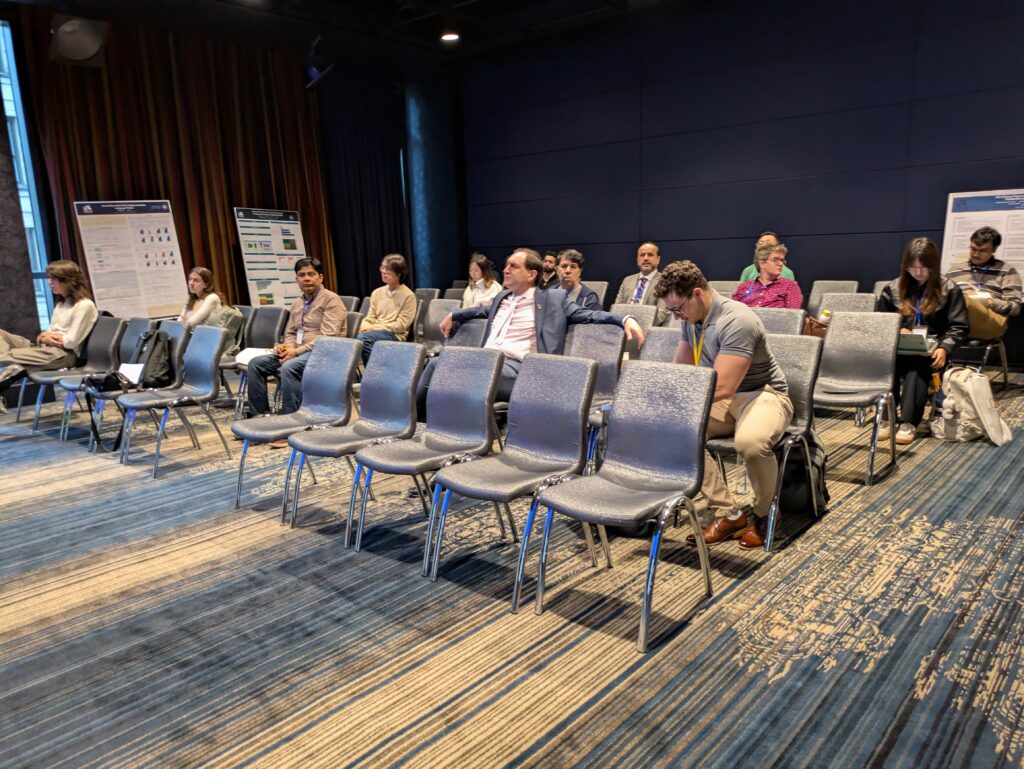
- Lightning Talk Session — 8AM-9AM
- Each presenter gives a 10-minute talk summarizing their work to spark interest and encourage follow-up discussion.
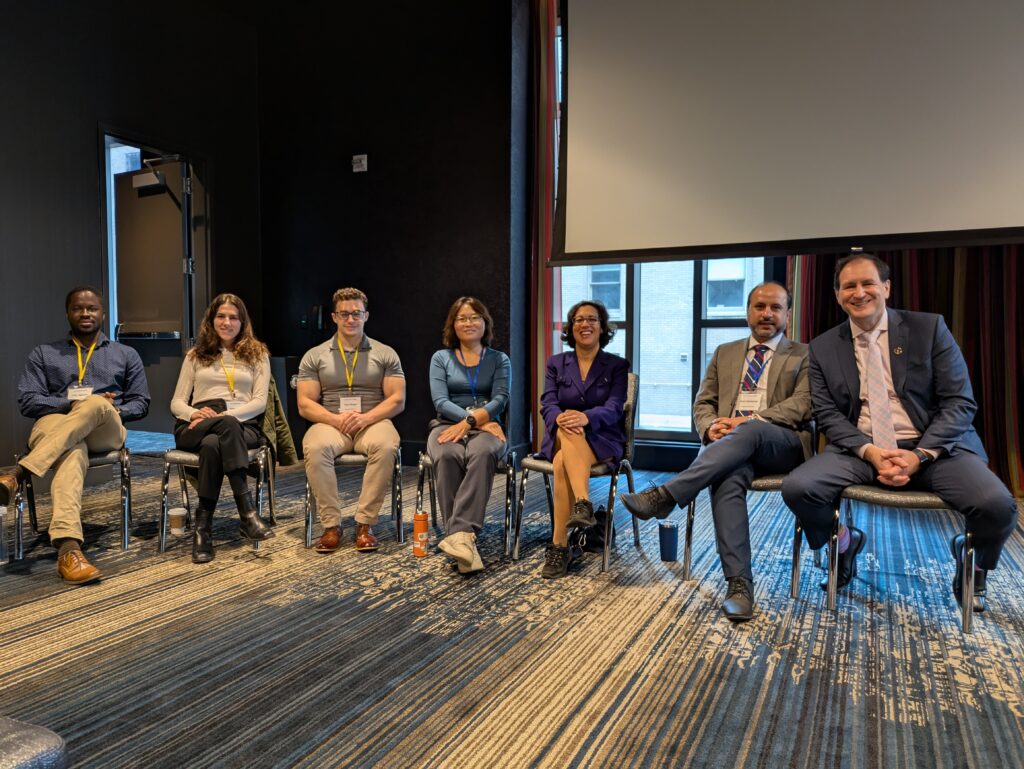
- Panel Discussion — 9AM-10AM
- Invited experts discuss planned topics and audience questions, with timed segments to ensure broad coverage.
- Panel list: Drs. Rebecca Deek, Iman Dehzanghani, Robi Polikar, Gail Rosen, Mindy Shi
- Coffee Break — 10AM-10:30AM
- Poster Session — 10:30AM-11:45AM
- Attendees engage in in-depth discussions with presenters about their research.
- Closing Remarks — 11:45-12
Bios
Felix Agbavor is a PhD Candidate in Biomedical Engineering, Science, and Health Systems at Drexel University. His expertise is in large language models and prediction/detection of dementia via speech signals.

Chaz Allegra is a researcher with EpiSci and a PhD student in Electrical and Computer Engineering at Rowan University. He offers a rich perspective on machine learning theory and ensemble methods for biomedical data.

Rebecca Deek, Ph.D. is an Assistant Professor in the Department of Biostatistics and Health Data Science at the University of Pittsburgh School of Public Health. Her research focuses on statistical and computational methods for omics and multi-omics methods, with a focus on metagenomics. She brings a deep expertise in integrative-omics, offering a crucial perspective on the challenges and opportunities in modeling high-dimensional biological data.

Iman Dehzangi, Ph.D. is an Assistant Professor in the Department of Computer Science at the Rutgers University School of Arts and Science. His work focuses on the development of robust and accurate models for solving a variety of problems in bioinformatics, from cancer subtype classification to protein structure prediction, with a focus on machine-learning techniques. He brings expertise in deep learning and representation learning, with applications spanning proteomics, genomics, and computational biology.

Robi Polikar, Ph.D. is a Professor and Department Head of Electrical and Computer Engineering at Rowan University’s Henry M. Rowan College of Engineering. As an expert in fundamental computer intelligence approaches, including ensemble learning and learning in nonstationary environments, he brings a strong foundation in machine learning methodology that contributes technical depth to discussions of algorithmic design for biomedical and biological data applications.

Gail Rosen, Ph.D. is a Professor of Electrical and Computer Engineering at Drexel University. As the head of the Ecological and Evolutionary Signal-processing and Informatics (EESI) lab, she is an expert in translating AI and machine learning to genomic applications, specializing in the microbiome. Her work began with extending traditional ML for taxonomic classification and is now engineering LLMs for understanding microbiomes and microbes.

Mindy Shi, Ph.D. is an Associate Professor in the Department of Computer and Information Sciences at the Temple University College of Science and Technology. Her work spans the intersection of computer and life sciences, including trustworthy AI and bioinformatics, and her involvement brings decades of experience developing statistical and machine learning methods for solving large-scale computational biology problems.